Best Nootropics for Studying 2026
Studying combines two distinct cognitive demands: sustained focus during study sessions and memory consolidation between them. The best study stack covers both — acute-effect focus ingredients (L-theanine + caffeine) plus daily-use memory ingredients (Bacopa, citicoline). This page ranks the products that include both.
What the evidence actually says
For each ingredient below, we link directly to the peer-reviewed source. Ingredient mechanism is not the same as product efficacy — a product can include the right ingredient at the wrong dose.
L-Theanine + Caffeine — sustained focus
For sustained study sessions, the L-theanine + caffeine combo is the foundation. In the trial linked below (Owen 2008), the pairing improved speed and accuracy on an attention-switching task; in a controlled trial (Rogers 2008, PubMed 17891480), theanine did not significantly reduce caffeine-induced jitteriness. 100–200mg L-theanine + 100mg caffeine, repeated 4–6 hours later if needed.
Source →Rogers 2008Our L-Theanine pageOur Caffeine pageBacopa Monnieri — long-term memory consolidation
Critical for retention of studied material. Bacopa improves memory consolidation — what your brain does during sleep with material you studied that day. 300mg standardized to 50% bacosides daily for 8+ weeks. Start at the beginning of the term, not the night before the exam.
Source →Our Bacopa Monnieri pageCiticoline — a choline donor
Citicoline is a choline donor. Our citicoline page rates its attention evidence as mixed and its verbal-memory evidence as moderate (delayed recall improved in one trial in older adults with inefficient memory, Spiers 1996). Cognizin is a standardized form.
Source →Our Citicoline (CDP-Choline) pageL-Tyrosine — under-stress performance
Acute exam stress and sleep deprivation deplete catecholamines. Tyrosine supplementation has documented benefit for cognitive performance specifically under stress, sleep loss, or cold. The stress trials with positive results used plain L-tyrosine at 2g a day or 100–150mg/kg, for short bursts; not for daily continuous use.
Source →Our L-Tyrosine (NALT) pageOur picks for studying
Ranked by how well each product matches the evidence above + our 5-pillar editorial audit.
Affiliate disclosureWe earn a commission if you buy through links on this page, at no extra cost to you. Our scores and rankings follow our published methodology; commissions do not influence them. Read our methodology
Mind Lab Pro
Why it's here: Caffeine-free design pairs perfectly with whatever caffeine source you use during study sessions (coffee, matcha, energy drinks). Includes L-theanine, Bacopa, citicoline, and L-tyrosine — covers all four study-relevant mechanisms in one open formula. Take daily through the term for cumulative Bacopa effect.
Qualia Mind
Why it's here: 31 ingredients, the most of any single formula in this review: includes everything in Mind Lab Pro except Bacopa and Pine Bark, plus Alpha-GPC and choline-supporting cofactors. The 6 capsules/day is friction during finals week; the $139 four-weekly subscription is friction for student budgets.
Thesis
Why it's here: Personalization may suit students with specific patterns (e.g., the "Clarity" formula for focus). Subscription model with monthly cost can add up over a semester.
Also considered — below our 7.0 bar
Products audited for this guide that score below the 7.0/10 a ranked pick needs in our 5-pillar editorial audit. Listed for transparency, not ranked or recommended.
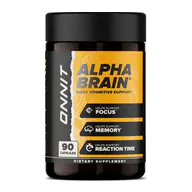
Alpha Brain
Onnit · Scores 5.2/10 — below our 7.0 bar
Caffeine-free Classic version, widely available at retail. Bacopa + L-theanine + Alpha-GPC are present but proprietary blends prevent verifying clinical doses.
Read full review
Frequently asked questions
When should I start taking nootropics for studying?
For acute-effect ingredients (L-theanine + caffeine), 30 minutes before a study session. For Bacopa and citicoline, start at the beginning of the term — most positive Bacopa trials ran 12 weeks, and citicoline's memory effects were measured after 2–3 months. The night before the exam is too late for Bacopa.
Will nootropics make me smarter?
No. Nootropics do not increase IQ or change underlying cognitive capacity. They support specific mechanisms — focus stamina, memory consolidation, stress resilience — that allow you to study more effectively for longer with the cognitive capacity you already have.
Are these safe for college students?
The ingredients on this page are generally regarded as safe for healthy adults. Students taking ADHD medication, antidepressants, or with bipolar diagnoses should consult their prescribing clinician before starting any of these — particularly L-tyrosine and Bacopa, which can interact with several medication classes.
Should I take Adderall instead?
Adderall is prescription-only for ADHD or narcolepsy. Using diverted Adderall (someone else's prescription) is illegal in the US and elsewhere, and is associated with cardiovascular and dependence risks. If you suspect you have ADHD, see a campus health clinician for evaluation. Nootropic supplements are not equivalent to Adderall and should not be marketed as such.
How does sleep interact with study supplements?
Sleep is when memory consolidation actually happens. No supplement compensates for chronic sleep deprivation. If you are pulling all-nighters regularly, optimize sleep first; supplements are second-order. L-tyrosine has documented benefit specifically for cognitive performance during acute sleep loss but should not be used as a license to skip sleep.
Is caffeine alone enough for studying?
For most students, caffeine + L-theanine is a simple starting point: in Owen 2008 (PubMed 18681988), 50mg caffeine with 100mg L-theanine (a 1:2 ratio) improved speed and accuracy on an attention-switching task. The supplements on this page add memory-consolidation ingredients (Bacopa, citicoline) on top; we cite no trial of them combined with caffeine + L-theanine.
Related guides
How we choose
Every pick must (a) include at least one ingredient with peer-reviewed evidence for the use case, (b) dose that ingredient at or near the clinical-trial dose, and (c) score ≥ 7.0/10 in our 5-pillar editorial audit. Read our full methodology.
← Back to Best Nootropics 2026